
Site-specific plowing plan
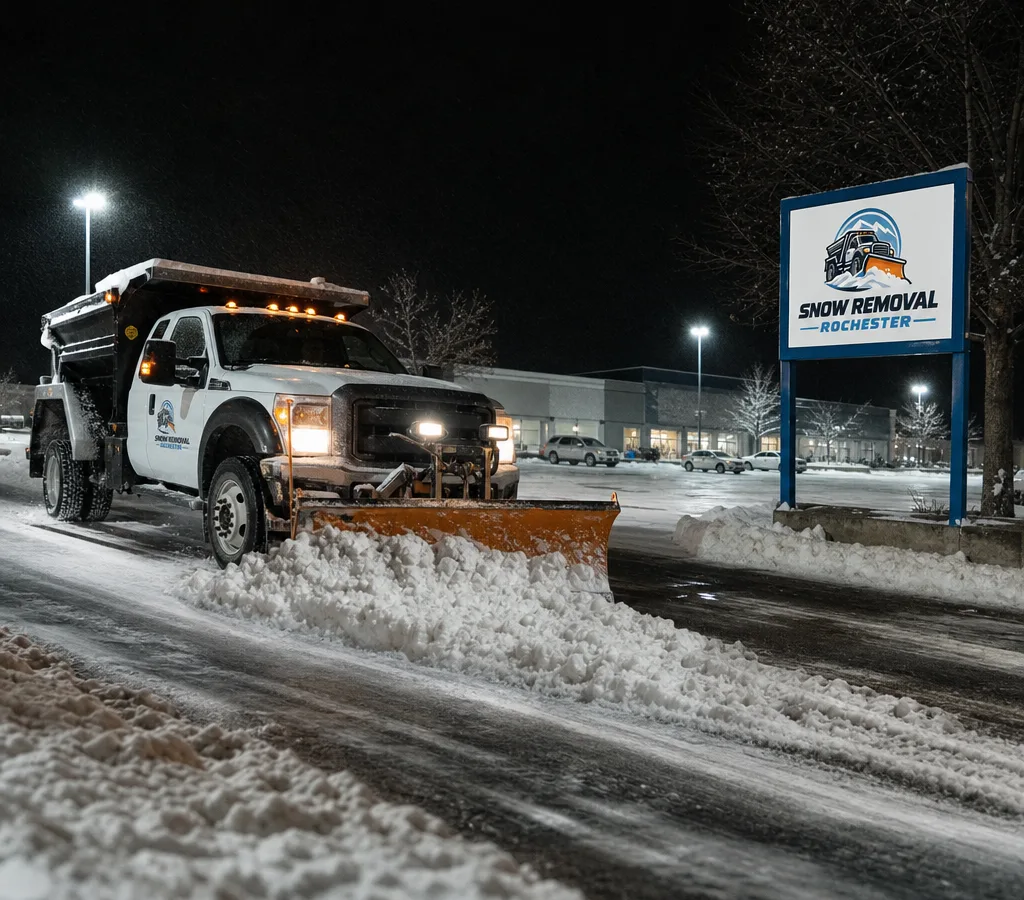
We identify push zones, stacking areas, and no-stack hazards like islands, curb lines, and catch basins, then set a repeatable route that keeps lanes and entrances open.
Commercial snow removal · Rochester, NY
Keep your parking lots, loading areas, entrances, and walkways open during lake-effect storms with a clear plan, reliable dispatch, and documented service for your property.
Operational access through winter
If you are searching for commercial snow removal Rochester NY, you are probably balancing safety, access, and liability while trying to keep your business running. Snow and ice create problems fast: blocked stalls, narrowed drive lanes, icy curb cuts, and slippery entries where foot traffic concentrates.
Snow Removal Rochester provides commercial plowing and deicing for business properties across Rochester. We focus on the places that affect operations first: entrances, primary travel lanes, accessible routes, and high-traffic sidewalks. Then we work the rest of the site so customers, employees, and deliveries can move normally.
Rochester storms can shift from light snow to heavy bands, and freeze-thaw cycles can turn runoff into glare ice overnight. The best results come from a plan built around your layout and peak hours, with clear trigger depths, priority areas, and a documented approach to salting and follow-up checks. If you want the broader overview of service options we offer across the region, start with Snow Removal Rochester NY.
Contract scope and conditions
We identify push zones, stacking areas, and no-stack hazards like islands, curb lines, and catch basins, then set a repeatable route that keeps lanes and entrances open.
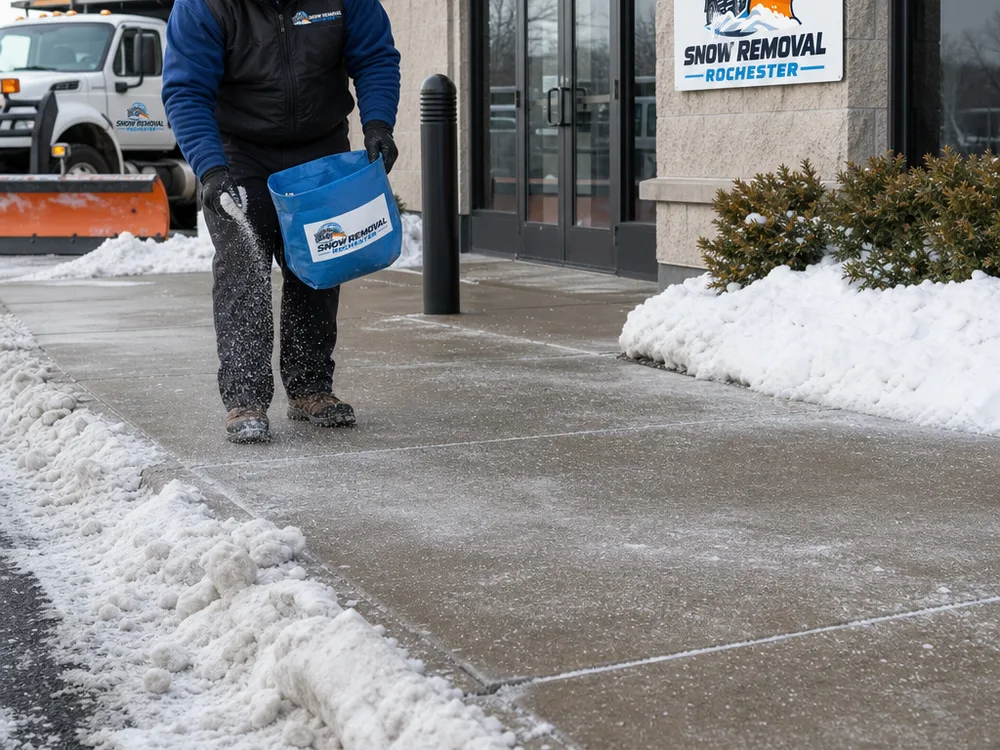
We clear sidewalks, steps, and building approaches where slip risk is highest, including around entry mats, ramps, and tight corners that trucks cannot reach.
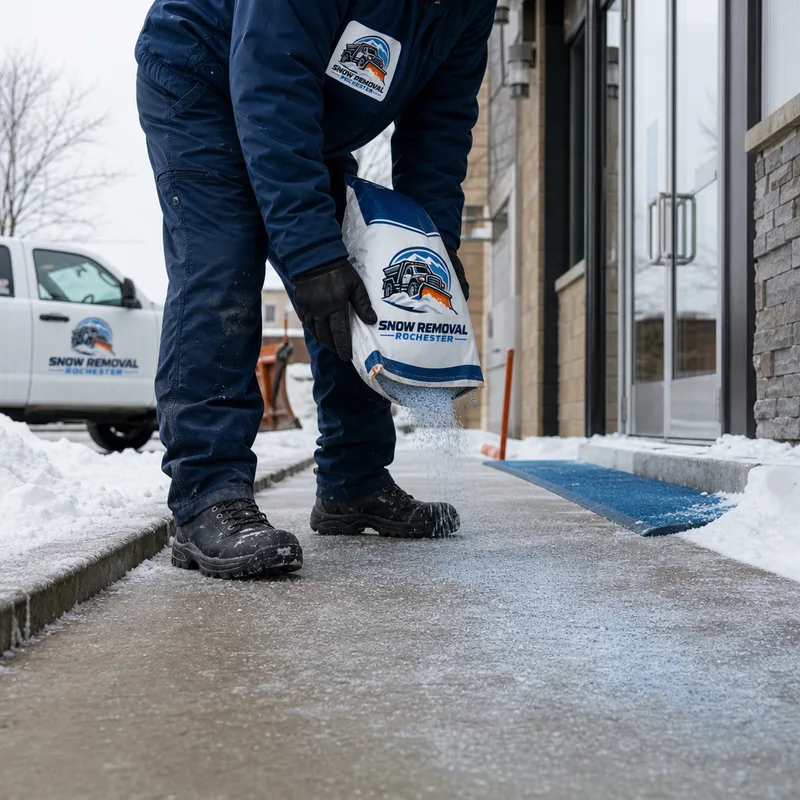
Salt application is based on site conditions like packed snow, refreeze, and shaded areas that stay slick longer, with extra attention at crossings and curb cuts.
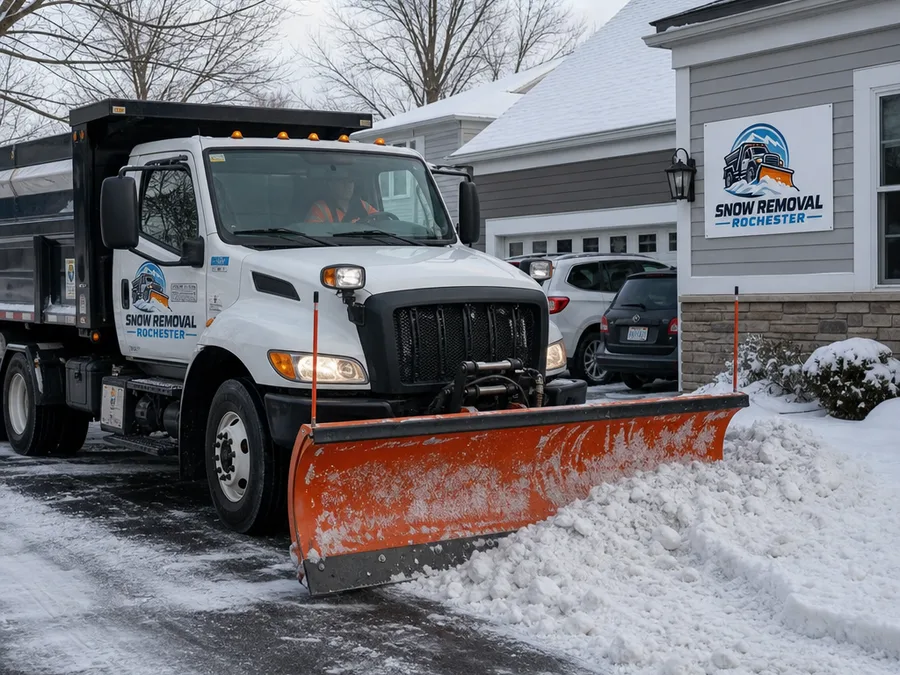
During long events, service may include multiple pushes and touch-ups so snow does not build into immovable windrows at driveway mouths and entrances.
You get a written scope and service notes that help with internal reporting and risk management, especially for multi-tenant and higher-traffic properties.
We plan around open hours, delivery windows, and early-morning staff arrival so the site is usable when it needs to be.
Detailed property care
Commercial sites are won or lost at the details. A wide-open lot still fails if the crosswalk is icy or the entry sidewalk is packed down.
Our work typically includes:
For properties near higher-traffic corridors like Downtown Rochester and the East End, getting lanes and pedestrian approaches opened early matters because turnover is constant. In areas with larger lots and longer drive aisles like Henrietta, route efficiency and stacking strategy matter because snow storage disappears quickly.
If your site needs a plan that includes both plowing and deicing triggers, we will walk the property, confirm boundaries, and define what counts as complete for your layout.
From site review through documentation
We review your site layout, priority areas, access points, and snow storage options. We also flag tight zones, pedestrian crossings, and surfaces that need a lighter touch.
We agree on trigger depths, start times, and what gets opened first—main entrances, primary lanes, accessible routes, and loading areas. This is where expectations get clear.
We plow to keep circulation open, then detail around islands, entrances, and walkways. For longer storms, we schedule additional passes so snow does not pack down.
We apply deicer where it actually performs, then re-check known refreeze spots like shaded areas and melt-water paths. This is especially important during Rochester's freeze-thaw swings.
We document what was serviced and when, so property managers have a record they can reference for tenant questions and internal risk files.
Property-based pricing
Commercial snow removal in Rochester typically ranges from about $150 to $600+ per plow visit for smaller lots, while larger commercial sites and multi-area properties often run $600 to $2,500+ per event, especially when sidewalks and deicing are included. Seasonal contracts are also common and can be priced as a flat monthly amount or a capped plan depending on scope.
Pricing changes most based on lot size, number of entrances and sidewalks, trigger depth, on-site obstacles, snow stacking room, and how much deicing you want (salt rates and frequency). The exact cost is confirmed after a site walk-through and a written scope.
Field results
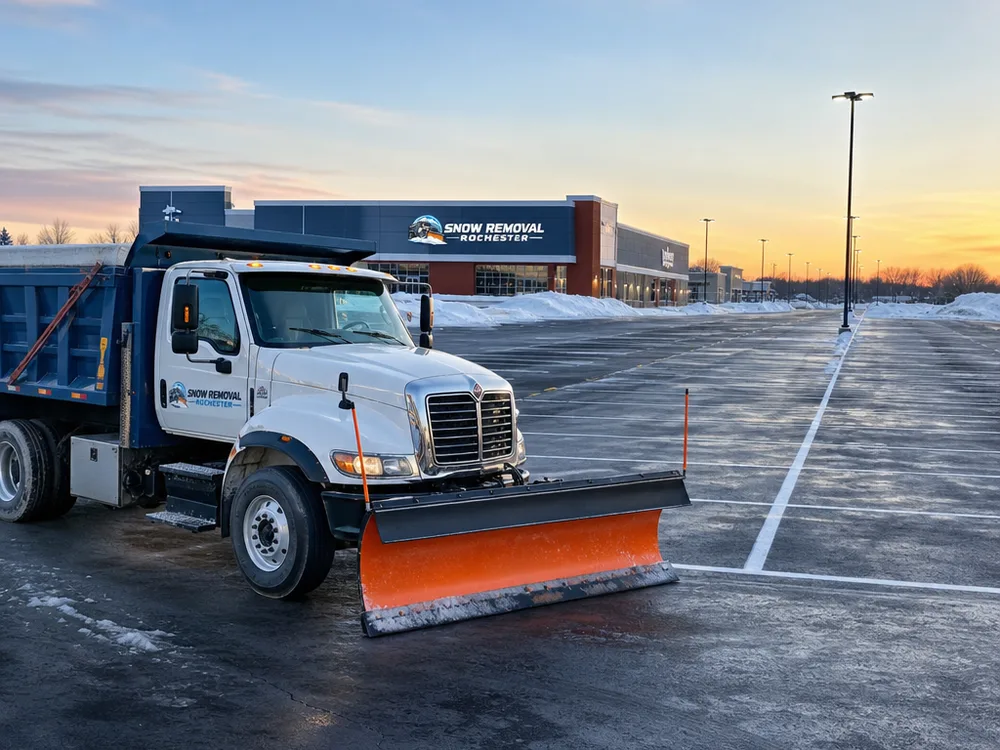
Prepare before the next event
If your current plan leaves you reacting to storms, we can map your priority areas, confirm trigger depths, and put your service expectations in writing before the next event.
Practical contract answers
Yes. A typical commercial snow plan covers parking lot plowing plus sidewalk and entrance clearing, because slips usually happen at the transitions between lot, curb cut, and doorway. During a site walk-through in Rochester, we confirm exactly which walks, steps, ramps, and access routes are included so there is no confusion during a storm.
Most commercial sites choose a trigger depth in the 1 to 3 inch range to keep traffic lanes usable and prevent packed snow, but the best trigger depends on your operating hours and surface type. For example, properties with early-morning staff arrival often need earlier service than sites that open later, and shaded areas that refreeze may require more frequent touch-ups.
Yes. We plan the push pattern so primary lanes and key entrances stay open while we work the rest of the lot in sections. For properties with deliveries, we can prioritize loading zones and turning radiuses first so trucks can get in and out safely.
Yes, deicing is available for lots and walks. Most commercial properties use rock salt for general conditions, with targeted applications at known refreeze points like shaded building lines, curb cuts, and melt-water paths. We match application timing to conditions so you are treating ice risk, not just spreading product.
Seasonal agreements typically define your included areas, trigger depths, response expectations, and how deicing is handled, then price service as a flat plan or a structured rate schedule for the season. This approach is common in Rochester because winter conditions can swing quickly, and property managers often prefer predictable planning with a written scope.
A reliable quote usually requires the site address, a quick understanding of your priorities (entrances, loading, sidewalks), and a walk-through to confirm square footage, obstacles, and snow storage options. If you manage multiple locations, we can standardize expectations across them so each property has the same definition of completion.
Plan before the next snowfall
Tell us what type of property you manage in Rochester and what matters most during a storm. We will recommend trigger depths, priority zones, and a clear scope for plowing, sidewalks, and deicing.